
The Cornerstone to Our Success
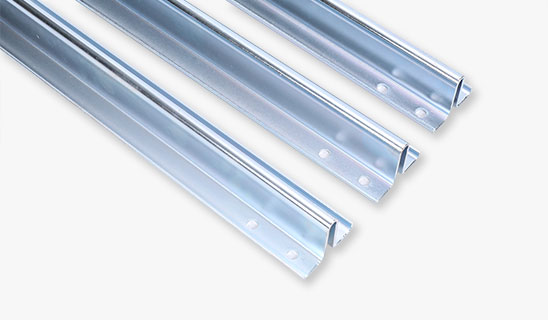
The quality of elevator guide rails affects the stability of elevator car and counterweight movement, installation accuracy, and subsequent maintenance. During procurement and acceptance inspections, visual appearance alone is not enough to determine whether a guide rail meets the requirements. Dimensional accuracy, geometric tolerances, running surface condition, and material properties must also be evaluated. Since technical requirements vary by guide rail model, inspections should be based on product drawings, contractual specifications, and applicable standards.
The cross-sectional dimensions of a guide rail determine how well it fits with guide shoes, fishplates, and mounting brackets. Key dimensions, including rail height, base width, running surface dimensions, and connection hole positions, should be measured against the product drawings to verify compliance with specified tolerances.
For machined guide rails, the end faces should also be checked for flatness, while connection holes should be inspected for positional accuracy. Visible burrs and machining damage should not be overlooked.
Bending along the rail length and cross-sectional twisting can make on-site alignment and installation more difficult. These deviations may also affect the alignment of rail joints.
Straightness and twisting should be checked using straightedges, dedicated measuring equipment, or suitable inspection fixtures. Measurements should follow the specified reference points and procedures, with results recorded accordingly. Checking only the two ends is insufficient; the geometric condition along the entire rail length should also be considered.
The running surface is a critical contact area between the guide rail and guide shoes. It should be inspected for cracks, deep scratches, dents, corrosion, and other defects that may affect contact conditions.
If the technical specifications define surface roughness requirements, a surface roughness tester should be used. Visual inspection alone cannot establish whether the specified roughness has been achieved. For guide rails with special surface treatment requirements, the relevant process and inspection records should also be verified.
Material composition and mechanical properties influence guide rail strength and service performance. During acceptance, buyers should review material certificates, batch information, and test reports. Particular attention should be paid to whether tensile strength, yield properties, and other specified indicators meet the product requirements.
If a project has additional material requirements, these should be verified according to the contract. Supplier descriptions alone are not sufficient evidence of material compliance.
| Inspection item | What to check | Common tools or records |
| Cross-sectional dimensions | Rail height, width, and key dimensions | Calipers, micrometers |
| Straightness | Bending along the rail length | Straightedges, dedicated measuring equipment |
| Twisting | Cross-sectional rotation along the rail length | Specialized inspection fixtures |
| Surface condition | Cracks, scratches, corrosion, and roughness | Visual inspection, roughness tester |
| End machining | End faces, connection holes, and hole positions | Calipers, specialized gauges |
| Material properties | Material grade and mechanical properties | Material certificates, test reports |
◆ Inspection results should be checked against the drawings, specified tolerances, and inspection procedures for the corresponding guide rail model. Measuring instruments and inspection equipment should also have valid calibration records to ensure reliable results.
For standardized T-type elevator guide rails, ISO 8100-33:2022 can be used as a reference. It addresses quality grades, dimensional characteristics, dimensional and geometric tolerances, and surface treatment requirements for guide rails and fishplates.
However, the scope of the standard and the regulations applicable to the project location must both be considered. The same acceptance criteria cannot automatically be applied to every guide rail type, product specification, or application. Buyers should clearly define the applicable standards, inspection items, and permissible deviations in the contract or technical agreement.
Before placing a bulk order, buyers should establish clear technical requirements and follow a defined inspection process:
Elevator guide rail quality inspection should be based on measurable results and traceable quality records. Including dimensional accuracy, geometric deviations, surface condition, and material properties in a consistent acceptance process is more effective in reducing procurement risks than relying solely on visual appearance or comparing prices.