
The Cornerstone to Our Success
Elevator guide rails are essential components that ensure smooth and safe vertical movement of elevator cars.
Their evolution reflects advances in materials science, manufacturing precision, and overall elevator technology, transforming from simple mechanical guides to integrated, high-tech systems.
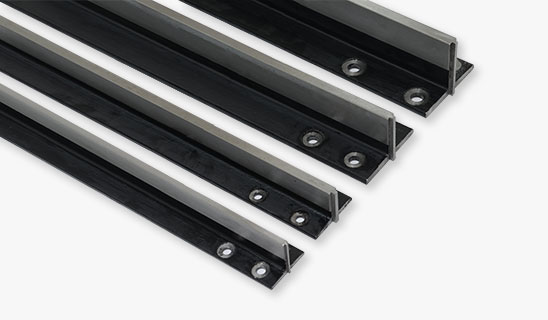
In the late 19th and early 20th centuries, elevator guide rails were mostly made of wood or crudely processed iron.
Low guidance accuracy and rough surfaces caused friction, vibration, and noise.
Safety mechanisms relied primarily on mechanical brakes and governors, with guide rails contributing minimally. Frequent maintenance and replacement were common.
By the mid-20th century, high-strength steel became the standard (keywords: steel guide rails, guide rail materials).
Advancements in hot rolling, machining, and precision grinding improved geometric accuracy, tolerances, and surface roughness.
Standardized guide shoes, rollers, and fasteners enhanced installation efficiency and component interchangeability.
The rapid expansion of multi-story and high-rise buildings led to the emergence of international standards, such as EN 81 and ASME A17.1, specifying guide rail dimensions, strength, tolerances, materials, and installation procedures.
Standardization improved compatibility, inspection methods, and verification processes, significantly increasing elevator safety and reliability.
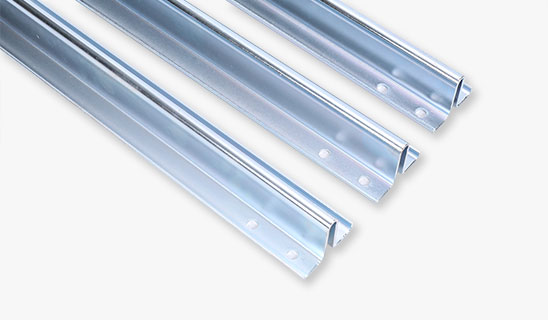
To reduce wear and maintenance costs, surface treatment technologies evolved, including quenching and tempering for hardness, chemical carburizing or nitriding, and polymer or composite coatings.
Advanced alloys and composite materials are applied in high-rise or corrosive environments, improving corrosion resistance and service life (keywords: guide rail wear, guide rail coatings).
Guide rail installation precision—verticality, coaxial alignment, and joint flatness—directly affects elevator ride smoothness and noise.
Modern installations use precision measuring tools such as laser distance meters and levels, combined with joint plates, pre-stressed fasteners, and fine adjustment techniques.
Vibration reduction is achieved through elastic damping materials or specialized dampers (keywords: guide rail alignment, guide rail installation, vibration control).
21st-century guide rails are increasingly “smart.” Online condition monitoring (accelerometers, displacement sensors, acoustic detection), non-destructive testing (ultrasound, magnetic particle, penetrant inspection), and data analysis enable early detection of wear, misalignment, or loosening. IoT-based predictive maintenance reduces downtime and extends guide rail and component lifespan (keywords: guide rail sensors, online monitoring, predictive maintenance).
From rough wooden or iron guides to modern precision-engineered steel and composite systems, elevator guide rails have undergone a remarkable transformation. Their evolution combines materials science, manufacturing techniques, installation expertise, and standardization. Understanding materials, surface treatments, tolerances, and monitoring strategies is critical for manufacturers and maintenance teams to ensure elevator performance, safety, and longevity.